
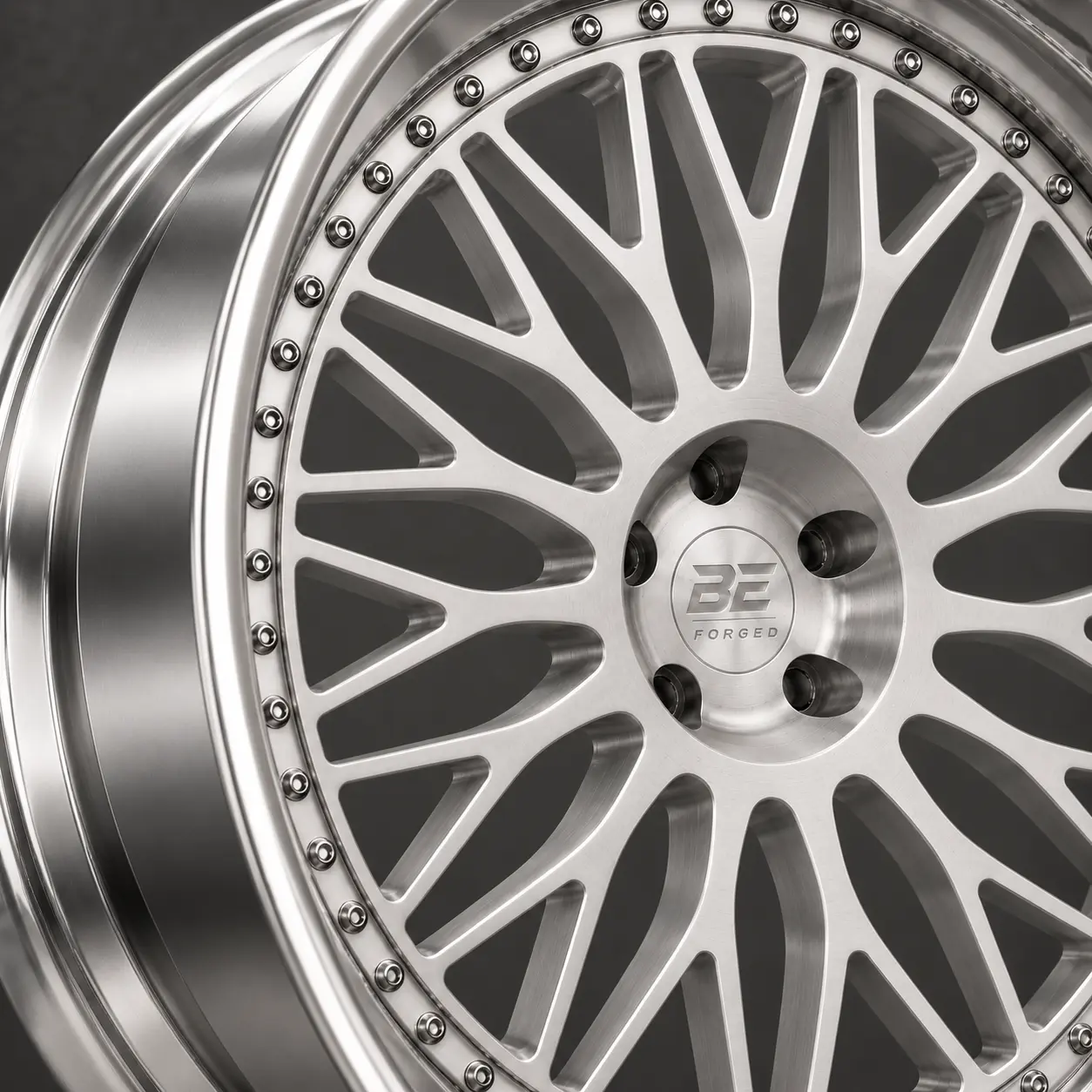
Forged Wheel Engineering & Performance
Wheel Education / Vehicle Fitment Guides
Presence you can see. Details worth getting right. A bespoke forged wheel brings design, dimensions, and intended use together. At BE FORGED, the conversation starts with your vehicle and the way you drive it, then works through the details that make the wheel right for your build.
Explore bead knurling & the inner / outer bead seats ↓
Begin with the application
A sports car and a loaded SUV ask different things of their wheels. Vehicle load requirements, tire selection, brake clearance, and driving conditions help shape the specification. Tell us about suspension changes, towing, or additional loads so those details can be part of the discussion from the start.
Geometry with a purpose
Spoke shape, face profile, wheel width, and offset influence how a wheel looks and works with the vehicle. The space behind the spokes matters, too: the brake package needs clearance, and the chosen wheel and tire combination needs room through steering and suspension movement.
These details are considered together. Our precision-fitment guide explains the vehicle information that helps establish the right starting point.
Bead knurling. Grip where it matters.
Bead knurling is a machined texture on the wheel’s bead seat, where the tire bead contacts the wheel. It adds surface grip to help reduce the tire rotating on the wheel during hard acceleration and braking.
Explore the two illustrations below. Tap either image to open the full-size guide in a new tab.
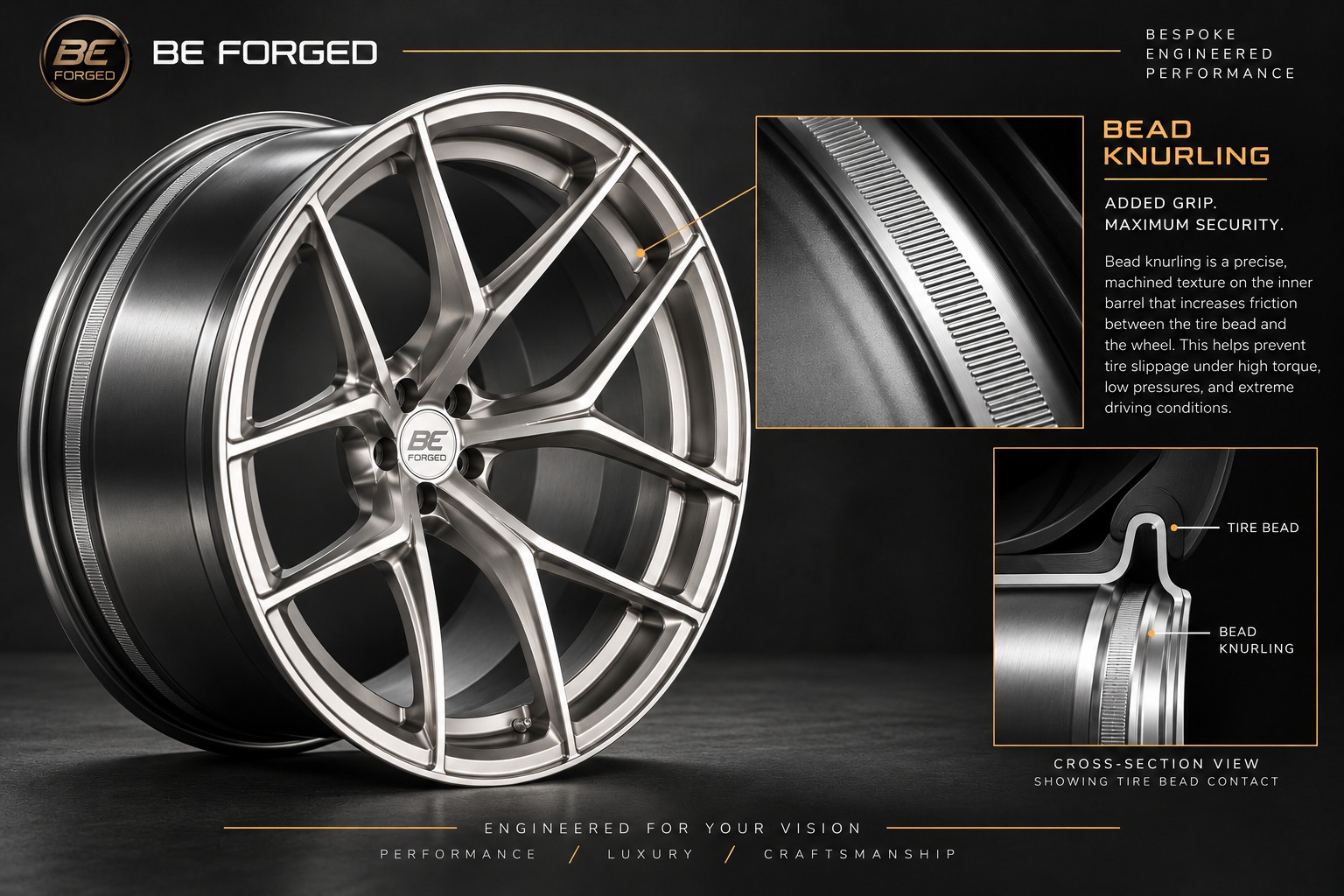
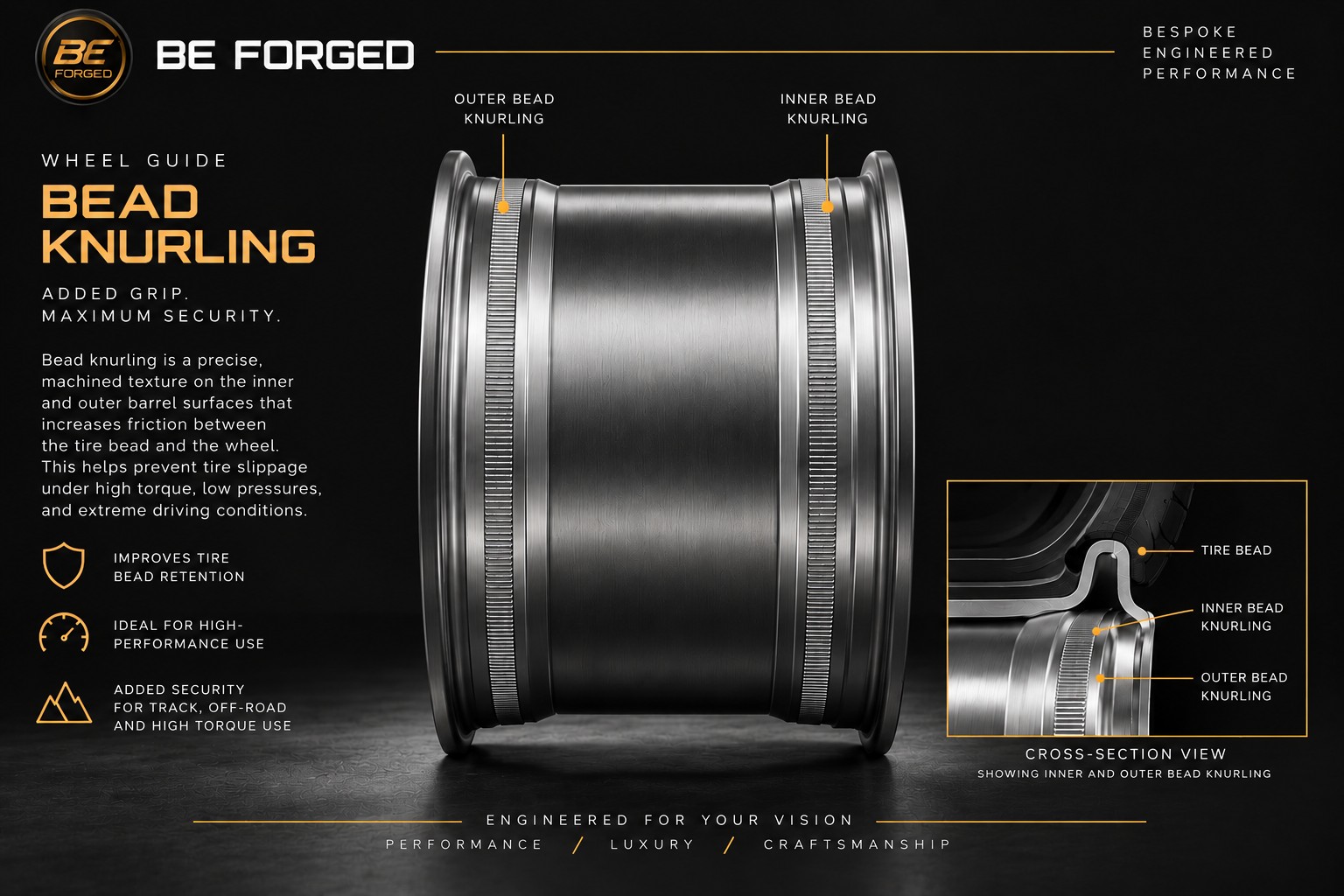
Surface grip, explained. Single bead-seat knurling treats one seat; the double configuration above treats both. Knurling relies on surface grip, while a beadlock uses a mechanical clamping ring. Ask our team to confirm availability and the right specification for your wheel, tire, and intended use.
Illustrations show the concept. Bead-seat geometry and knurling details vary by wheel design.
From specification to finished wheel
Our manufacturing overview follows the process from confirmed dimensions and finish to CNC machining, assembly for multi-piece builds, and inspection before shipment. Inspection provides a final opportunity to check the finished work before the wheels leave production.
Choosing monoblock or multi-piece construction is another part of the specification, alongside the face design, fitment, and finish you want.
Engineering information for your configuration
Material, construction and fitment explain how a wheel is specified. They do not, by themselves, establish the tested load rating or weight of every finished configuration. The illustrations on this page explain design concepts; they are not test reports.
Material data and wheel testing
Explore our sourced comparison of forged aluminum, cast aluminum and steel, including tensile strength, density and the reasons wheel geometry matters. The 6061-T6 reference table explains the material values separately from finished-wheel load capacity.
SAE J2530 sets performance, sampling, testing and marking requirements for applicable aftermarket wheels used on passenger cars and light trucks on the highway. A standard reference is not a test report for a particular wheel. When reviewing a compliance statement, confirm the wheel specification, rated load, applicable test procedure and supporting report. FEA evaluates defined load cases; physical testing evaluates the completed design under a specified procedure.
Confirm the important details before ordering
Review the wheel model, dimensions, front and rear setup, finish, hardware, and applicable load rating with our team. Ask about the engineering or test information available for your selected configuration and share any requirements specific to its intended use.
Let’s get the details right for your build. Talk wheels with BE FORGED and bring your vehicle, your ideas, and your questions.